


Inherited a Coin Collection? Here’s What to Do First
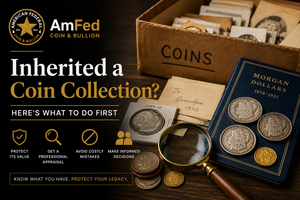

Inherited a Coin Collection? Here's What to Do First
One of the most rewarding parts of my job is helping families understand collections that have been passed down through generations.
Almost every week someone walks into our showroom carrying a box, a coffee can, an old cigar box, or a binder full of coins and says the same thing:
"I inherited these. I have no idea what they're worth."
If that's your situation, you're not alone.
In fact, it's one of the most common reasons people visit our store.
The good news?
You don't need to become a coin expert overnight.
You simply need to avoid a few common mistakes.
First Things First—Don't Clean Anything
I know it's tempting.
The coins may look dirty.
Some have fingerprints.
Others have dark toning that makes them appear old or tarnished.
Please don't clean them.
Cleaning can permanently reduce a coin's collector value.
Even well-intentioned polishing can leave microscopic scratches that experienced collectors immediately recognize.
Once that original surface is gone, there's no putting it back.
Keep Everything Together
Many collections have more value because of how they were assembled.
Albums.
Original envelopes.
Mint packaging.
Handwritten notes.
Purchase receipts.
All of these can provide valuable information.
Even if something appears insignificant, keep it with the collection until it's been evaluated.
Don't Assume Everything Is Valuable...
...but don't assume it isn't.
Some inherited collections contain common coins worth only their face value.
Others contain rare dates that collectors have searched decades to find.
I've seen families nearly spend rare coins simply because they didn't recognize what they had.
The opposite happens too.
People sometimes expect every old coin to be worth thousands of dollars.
Reality usually falls somewhere in the middle.
Separate Sentimental Value From Market Value
This is often the hardest part.
Some collections represent decades of someone's life.
A grandfather who collected Morgan Dollars.
A father who bought Gold Eagles every Christmas.
A grandmother who saved silver coins from circulation.
Those memories have tremendous personal value.
The market, however, only values rarity, condition, demand, and precious metal content.
Understanding the difference helps families make thoughtful decisions.
Resist the Urge to Sell Immediately
When settling an estate, there's often pressure to make quick decisions.
That can lead to costly mistakes.
Take your time.
Learn what you have.
Understand why certain coins are valuable.
The collection has likely been together for years.
Waiting another week or two to gather information rarely hurts anything.
Get a Professional Appraisal
This is where experience matters.
A knowledgeable dealer can identify:
- Rare dates
- Mint marks
- Counterfeit concerns
- Bullion value
- Collector value
- Coins that may benefit from certification
More importantly, they'll explain why something has value—not simply tell you what they're willing to pay.
Don't Be Afraid to Ask Questions
A professional appraisal should feel like a conversation.
Ask:
- What makes this coin valuable?
- Is this worth certifying?
- Should these stay together as a collection?
- Which pieces are the most desirable?
- What would collectors be looking for?
An experienced dealer should welcome those questions.
Sometimes the Best Decision Isn't Selling
This surprises people.
Sometimes I tell families not to sell.
Certain collections continue to appreciate over time.
Others carry significant sentimental value that can't be replaced.
Every family's situation is different.
Our job isn't to convince someone to sell.
Our job is to help them make an informed decision.
Final Thoughts
Receiving a coin collection can feel overwhelming.
There are unfamiliar dates.
Mint marks.
Different metals.
Boxes filled with coins you've never seen before.
You don't have to figure it all out yourself.
The first step isn't selling.
The first step is understanding.
Once you know what you have, you can decide whether to keep it, pass it down, or sell it with confidence.
Knowledge protects your family's legacy.
That's where every collection should begin.
Nick Grovich
President, AmFed Coin & Bullion
This article is provided for educational purposes only and should not be considered financial, tax, or legal advice. Every collection is unique, and values can vary significantly based on rarity, condition, precious metal content, and current market demand.
- Nick Grovich
