
Description
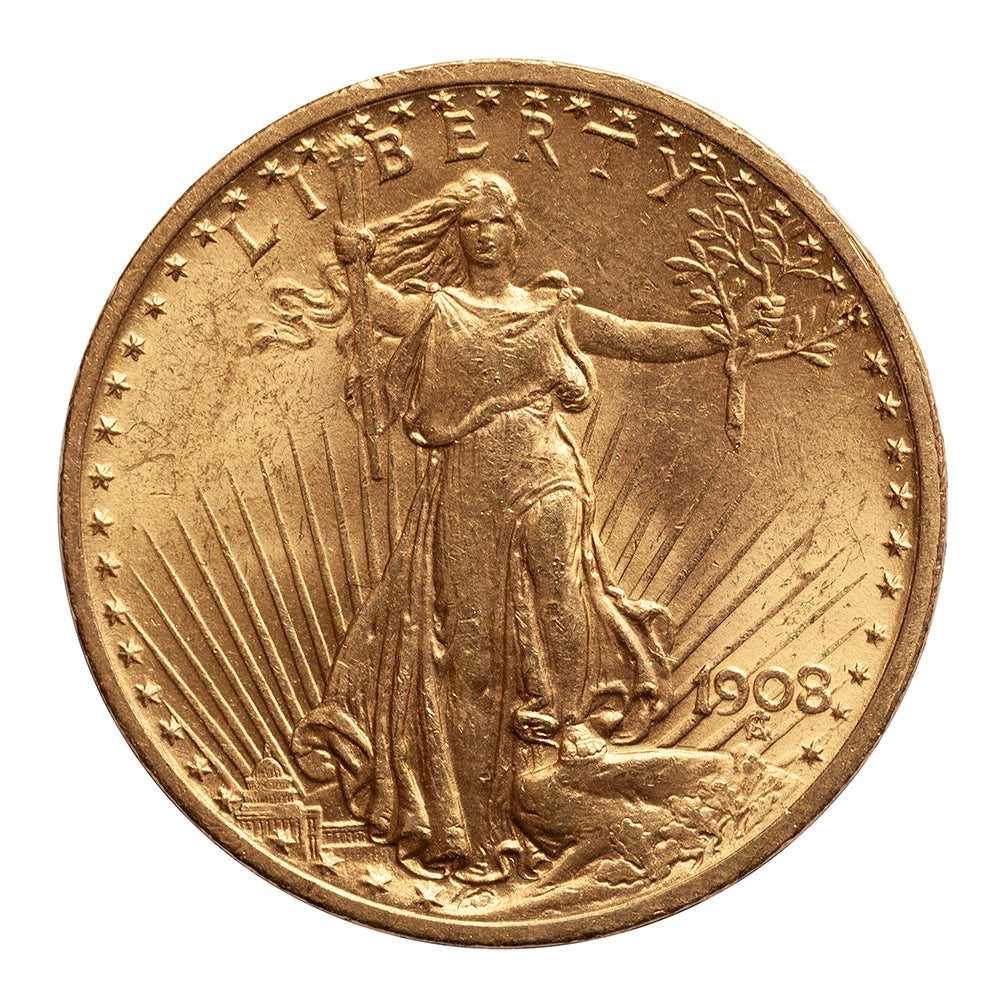
$20 Saint-Gaudens Gold Double Eagle – Random Year BU
The $20 Saint-Gaudens Gold Double Eagle is one of the most celebrated gold coins ever produced by the United States Mint. Designed by renowned sculptor Augustus Saint-Gaudens at the request of President Theodore Roosevelt, the coin debuted in 1907 and remained in production through 1933.
Each coin contains approximately 0.9675 troy ounce of pure gold and was struck from an alloy of 90% gold and 10% copper. This listing is for a random-year Saint-Gaudens Double Eagle in Brilliant Uncirculated condition. The specific date and mintmark supplied will depend on available inventory.
$20 Saint-Gaudens Double Eagle Highlights
- Historic pre-1933 United States gold coin
- Contains approximately 0.9675 troy oz of pure gold
- 90% gold composition
- $20 legal-tender face value
- Designed by Augustus Saint-Gaudens
- Issued by the United States Mint
- Struck from 1907 through 1933
- Brilliant Uncirculated condition
- Random year and mint based on available inventory
- Combines substantial gold content with genuine numismatic appeal
$20 Saint-Gaudens Double Eagle Specifications
| Denomination | $20 USD |
| Metal | Gold |
| Fine Gold Content | Approximately 0.9675 troy oz |
| Total Weight | 33.436 grams |
| Composition | 90% gold, 10% copper |
| Purity | .900 fine gold |
| Diameter | 34 mm |
| Edge | Lettered |
| Designer | Augustus Saint-Gaudens |
| Issuer | United States Mint |
| Condition | Brilliant Uncirculated |
| Year | Random year based on inventory |
Augustus Saint-Gaudens’ Iconic Design
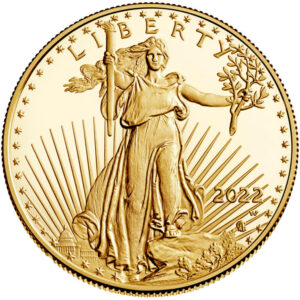
The obverse features a dramatic full-length image of Liberty advancing forward while holding a torch in her right hand and an olive branch in her left. Rays of the rising sun appear behind her, with the United States Capitol visible in the background.
The reverse depicts a bald eagle in flight above the rising sun. The flowing design and strong sense of movement helped distinguish the Saint-Gaudens Double Eagle from earlier U.S. gold coinage and contributed to its enduring reputation among collectors.
The Roosevelt–Saint-Gaudens Coinage Renaissance
President Theodore Roosevelt believed American coinage should rival the artistic quality of ancient Greek and Roman coins. He selected Augustus Saint-Gaudens, one of the nation’s leading sculptors, to redesign major U.S. gold denominations.
The original 1907 Double Eagle was conceived in extremely high relief, but the design proved difficult to strike efficiently with the Mint’s production technology of the era. The design was subsequently modified into lower-relief versions suitable for mass production while retaining Saint-Gaudens’ principal artistic elements.
Why Buy a $20 Saint-Gaudens Gold Double Eagle?
The Saint-Gaudens Double Eagle occupies a compelling position between bullion ownership and numismatic collecting. Each coin contains nearly one full troy ounce of gold, while also representing an authentic piece of early twentieth-century American monetary history.
Unlike modern bullion coins created primarily for precious-metals buyers, Saint-Gaudens Double Eagles were originally struck as legal-tender circulating gold coins. Their age, surviving condition, date and mint of origin can all influence collector demand in addition to their underlying gold content.
For buyers seeking physical gold with historic character, the Saint-Gaudens Double Eagle offers a distinctly different ownership experience than a modern one-ounce bullion coin.
Browse additional gold coins and bullion or explore American Federal Coin & Bullion’s selection of rare coins.
Saint-Gaudens vs. Liberty Head Double Eagle
Both the Saint-Gaudens and Liberty Head Double Eagles carry a $20 face value and contain approximately 0.9675 troy ounce of pure gold. The key distinction is their design era.
The Liberty Head Double Eagle was produced from 1850 through 1907 and features James B. Longacre’s Liberty portrait. The Saint-Gaudens design replaced it in 1907 with a more sculptural and dynamic interpretation of Liberty created during Theodore Roosevelt’s effort to improve American coinage.
What Does Random Year Mean?
The specific date and mintmark you receive will be selected from American Federal Coin & Bullion’s available inventory when your order is fulfilled. Multiple-coin orders may include different dates or mintmarks.
This listing is intended for buyers seeking a Saint-Gaudens Double Eagle by type rather than a specific date, mint or variety. If you are looking for a particular issue or certified grade, contact American Federal Coin & Bullion regarding current numismatic inventory.
Frequently Asked Questions
How much gold is in a $20 Saint-Gaudens Double Eagle?
Each coin contains approximately 0.9675 troy ounce of pure gold.
What is the purity of a Saint-Gaudens Double Eagle?
The coin is struck from .900 fine gold, consisting of 90% gold with the balance primarily copper.
When were Saint-Gaudens Double Eagles minted?
The series was produced from 1907 through 1933, although dates commonly available in the numismatic market vary substantially in rarity and surviving population.
Which year will I receive?
This is a random-year product. The specific date and mintmark depend on available inventory when your order is fulfilled.
What does Brilliant Uncirculated mean?
Brilliant Uncirculated generally describes a coin that has not experienced normal circulation wear and retains significant original mint appearance. Historic coins may still exhibit normal contact marks or other characteristics from minting and storage.
Is a Saint-Gaudens Double Eagle bullion or a rare coin?
It has attributes of both. Each coin contains nearly one troy ounce of gold, but its historic origin, date, mint and condition can also contribute meaningful numismatic value.
Reviews
There are no reviews yet.